On the shop floor, oven alarms aren’t just noise—they’re the sound of scrap piling up. When the heating profile drifts, you get warp, optical distortion, and thermal stress fractures. Minutes slip away on every batch, and margins disappear with every square meter. In tempering, bending, lamination, coating drying, and insulating glass sealing, temperature control isn’t a perk. It’s the job. We built our high power density IR heaters for that reality. They deliver intense, controllable radiant heat exactly where the glass needs it, exactly when it needs it, and with repeatability that keeps the line moving.
What matters, technically
High power density IR heaters come down to output intensity, response speed, and control resolution. In the real world, those three drive cycle time and yield.
- Technology and wavelength: We use short-wave infrared (NIR), peaking around 1.0–1.2 μm. That band gets absorbed strongly by glass surfaces—especially when coatings are present—and by lamination interlayers. The payoff is direct heating of the target, not wasted time heating air.
- Power density and output: These heaters run at high power density, typically delivering tens of kW/m² at the work surface. That intensity shortens ramp-up and cuts soak time, trimming overall cycle time. In tempering and bending, it means hitting target temperature with less thermal lag. In lamination, it means faster adhesive flow without overheating the outer plies.
- Response time and control: NIR heaters hit full output fast and cool quickly when power drops. That gives you tight control over the heating curve—sharp ramps, stable holds, clean cutoffs. Tighter control translates to fewer variations in optical quality and fewer stress fractures.
- Thermal uniformity and field shaping: The heaters are engineered for a uniform radiant field across the glass, edge to center. Uniformity reduces hot and cold spots that cause uneven expansion and warp. We shape the field to match what you’re running—flat sheets, curves, variable sizes—so heat stays even as the glass moves.
- Materials and construction: Emitter faces are quartz, chosen for high-temperature stability and resistance to thermal shock. Housings are built for industrial duty, with solid sealing and shielding against convective heat loss. The assembly is meant to be serviced in minutes, not hours.
- Integration and compatibility: The heaters fit standard mounting footprints and connection schemes used in tempering furnaces, bending lehrs, lamination autoclaves and ovens, coating lines, and insulating glass sealing stations. We match voltage and power configurations to your plant supply and control interfaces, so installation is straightforward.
Why this works where glass gets processed
Uneven heat costs you in scrap, rework, and the downtime it takes to clear jams and restart the line.
Tempering and bending: control thermal stress, not just temperature
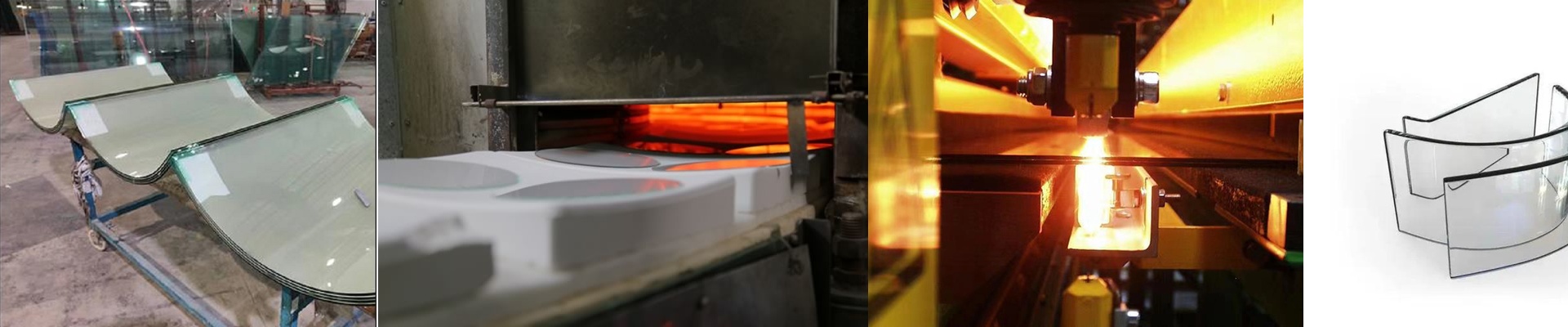
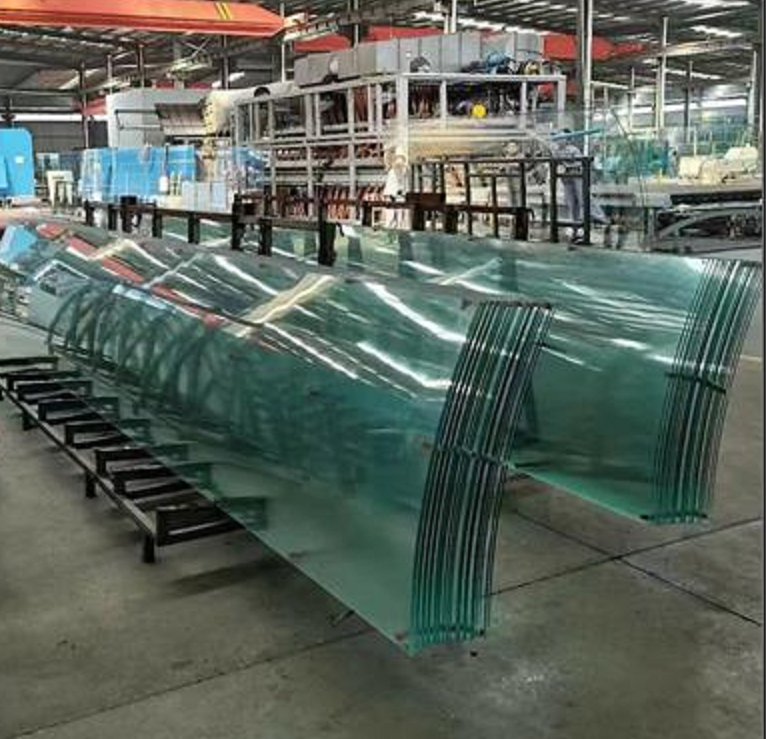
In tempering, the glass has to heat quickly and evenly before quenching. If the heat is slow, the glass softens unevenly and the quench can’t build the surface compression you need. That leads to breakage in handling and out in the field. If the heat is uneven, you get optical distortion and roll-wave. Our high power density IR heaters shorten the heating window and tighten the temperature spread across the sheet. Fast response means the system can correct for line stoppages and temperature drift without long recovery times. The result is fewer fractures, more consistent curvature, and higher throughput. In hot bending, the same principles apply. The glass has to reach the bend line precisely and hold there long enough to form without thinning or splitting. With high power density IR, you get rapid, localized heating that follows the bend path, so you don’t have to overheat the whole pane. Cycle time drops, and repeatability improves on complex shapes.
Lamination: faster adhesive flow without scorching
EVA, SGP, and PVB lamination depends on hitting the interlayer’s viscosity fast—fast enough to avoid premature crosslinking, but controlled enough to prevent bubbles and scorch. Convection-heavy heating can leave the outer glass too hot while the core lags, giving you optical defects and weak bonds. High power density IR targets the interlayer directly, with wavelengths tuned to absorption. Heat penetrates quickly and evenly, so adhesive flows uniformly and bubbles get pressed out in the first cycle. The fast cutoff reduces overheating at edges and corners, where scorch tends to start. Fewer rejects, shorter cycles, less scrap.
Coating drying and curing: faster throughput, lower energy
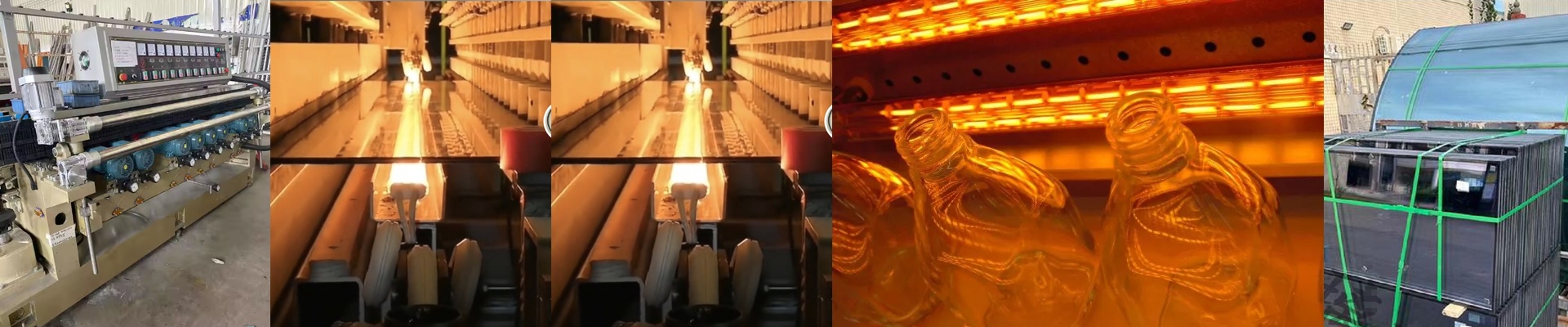
Glass coatings—low-E, reflective, protective—need precise drying and curing profiles. Weak heat forces the line to slow down. Uneven heat gives you uneven film properties and color shift. High power density IR dries and cures coatings faster because the energy hits the film directly. The quick response lets the system track line speed without overshooting, so you can run higher speeds without sacrificing quality. Energy use drops because you’re heating the coating, not the whole chamber.
Insulating glass sealing: repeatable seal, consistent production
On insulating glass lines, the secondary seal has to cure quickly and uniformly. Uneven heating leads to inconsistent sealant properties, and that can compromise long-term durability and moisture resistance. With high power density IR, the sealant cures on schedule, edge to edge, with consistent temperature across each unit. Rapid response keeps the line moving when product mix changes, and controlled heat reduces the risk of overheating the primary seal.
What to keep in mind
High power density IR heaters are straightforward to integrate, but they do need real-world attention.
- Line speed and control tuning: These heaters respond fast, so the control loop has to match. If your system uses long integral times or slow feedback, you may need to adjust controller settings to take full advantage of the speed. We provide standard control profiles and parameter ranges to make that easier.
- Emissivity and glass type: Coated and tinted glass absorb differently. The heating profile may need tweaking when you switch products. Our systems include presets and user-adjustable parameters to handle product variation without reworking the entire line.
- Installation clearances: High power density means intense radiant energy. You need proper clearance and shielding for operator safety and to avoid heating nearby equipment. Mounting has to maintain the designed distance to the glass to keep uniformity. We supply exact clearance specs and hardware to make it repeatable.
- Thermal management: These heaters are efficient, but concentrated output raises local heat in the machine frame. Keep cooling and ventilation paths clear. In high-duty cycles, monitor component temperatures to protect service life.
- Service and spares: Emitters last a long time, but they are wear parts. Keep a spare set on hand for quick replacement during planned maintenance. Modular construction lets you swap them in minutes, minimizing downtime. If your goal is less scrap, shorter cycles, and a line that runs at steady state, the heating system has to be as disciplined as the rest of the process. High power density IR heaters deliver that discipline—fast, repeatable, controllable heat where the glass needs it, with the intensity to keep pace and the precision to protect yield.